

Well, my little golf addicts, you wanna know just how lucky you are? It's time to pull the curtain back a little more on caddying and I got the guy who makes the best yardage books on tour (Mark Long) to give his blessing on showing you a hole or two every week from the same books caddies and players use on the PGA Tour.
This week, the PGA Tour kicks the new season off in Napa, California, at Silverado Resort and Spa's North Course. Last year was the first time the tournament was held there, meaning everyone playing for the second year will have a big advantage over the first-timers. That is, of course, if you made the right notes in your yardage book!
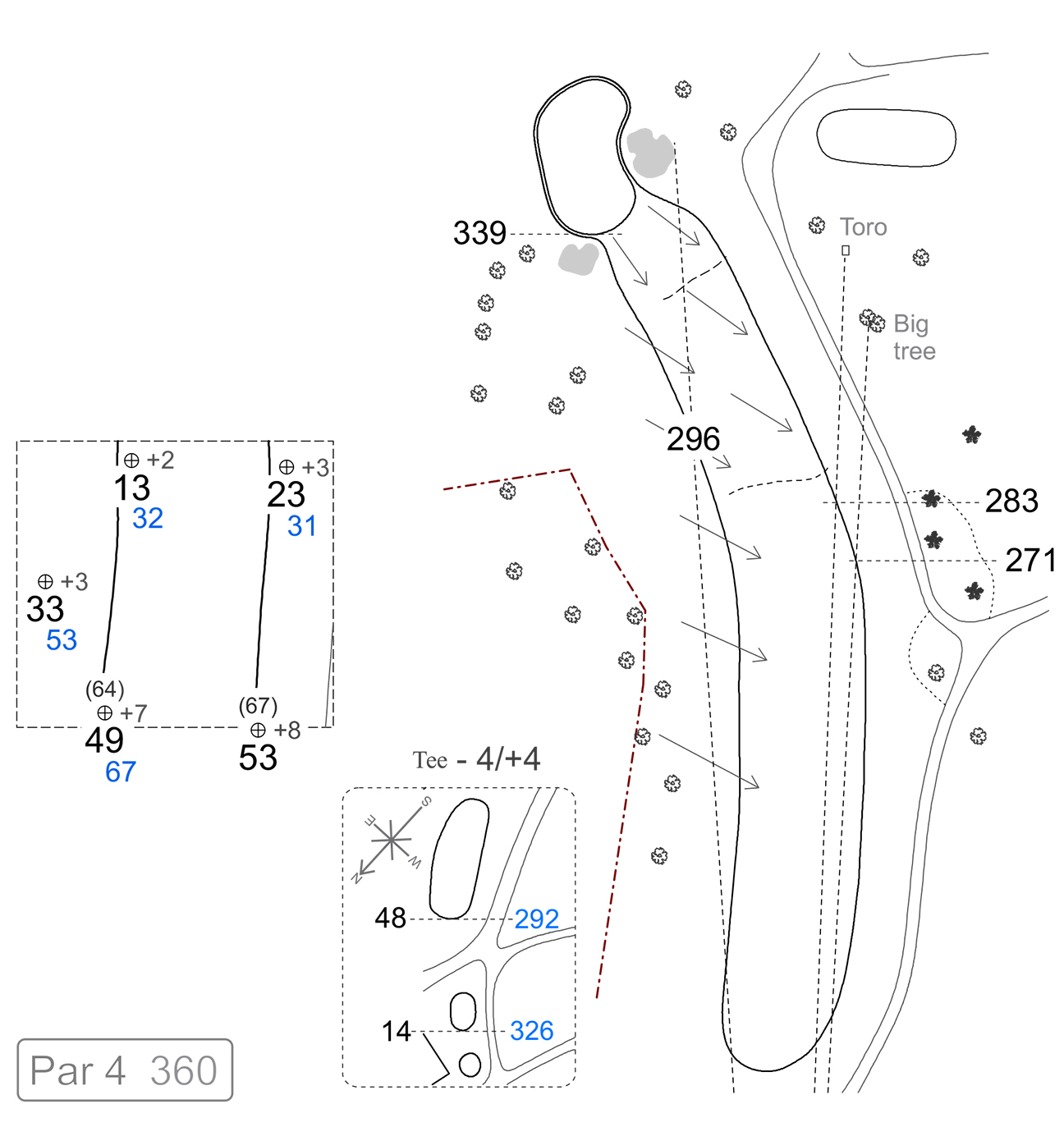
Let's start with the only par-4 on the front nine to play under par last year, No. 8. It plays 360 yards on the scorecard, but there's a chance the PGA Tour moves the tee up one day and makes it drivable for most of the field.
Last year's stats: two eagles, 93 birdies, 278 pars, 54 bogeys, six doubles and three triples.
All the arrows on the graphics define the slope of the ground. The top half of the page gives caddies and players key info for the tee shot: compass reading for wind, yardage differences from the back of the up tee boxes as well as fairway run-out numbers in bold. For example, it's 271 yards to the end of the fairway in line with the big tree and 283 yards at a visible Toro.
The small, square box on the left is what caddies call the JICYFU yardages (Just In Case You Fudge Up). Those only come into play if your player's only option is to hit it as close to the green as possible.
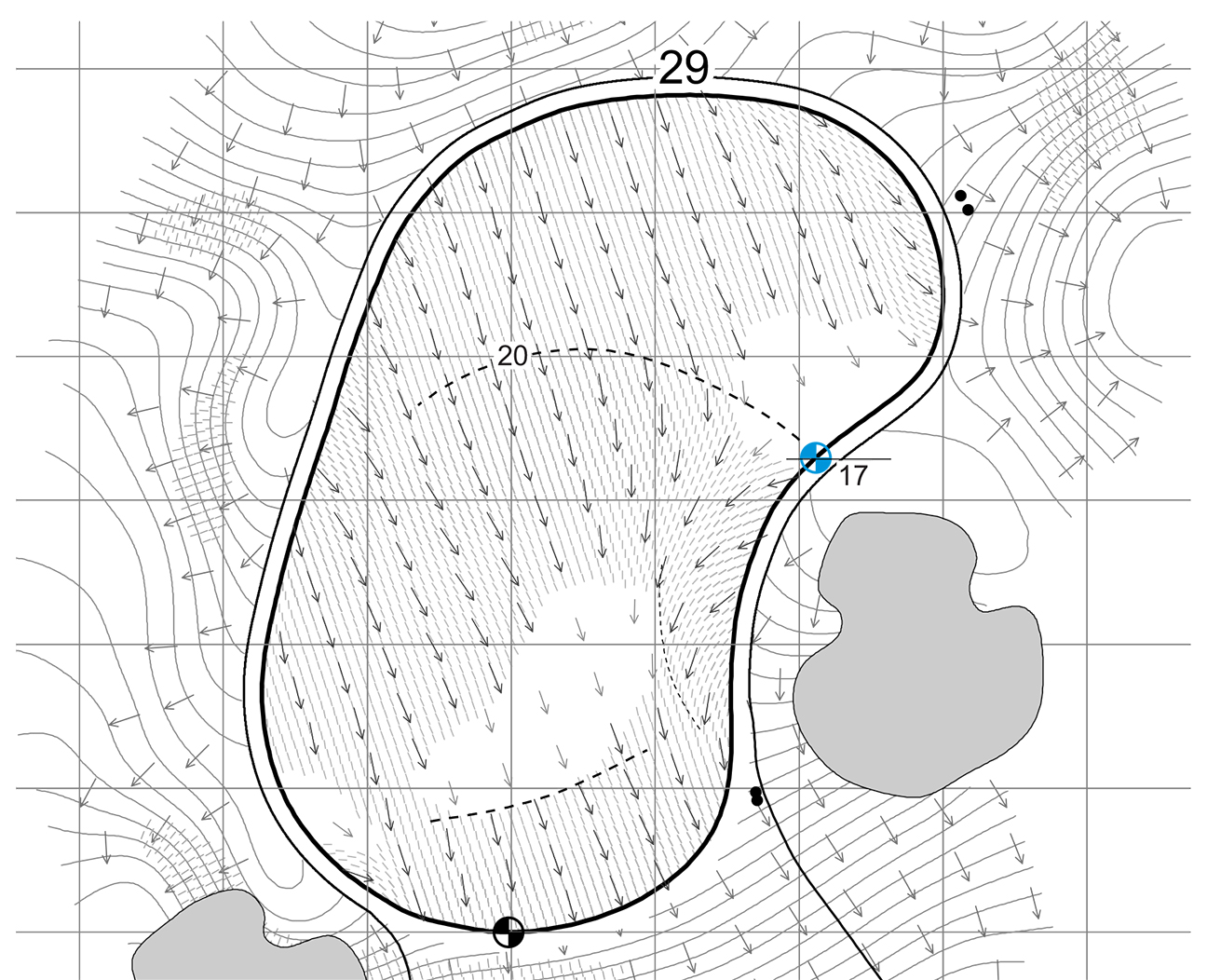
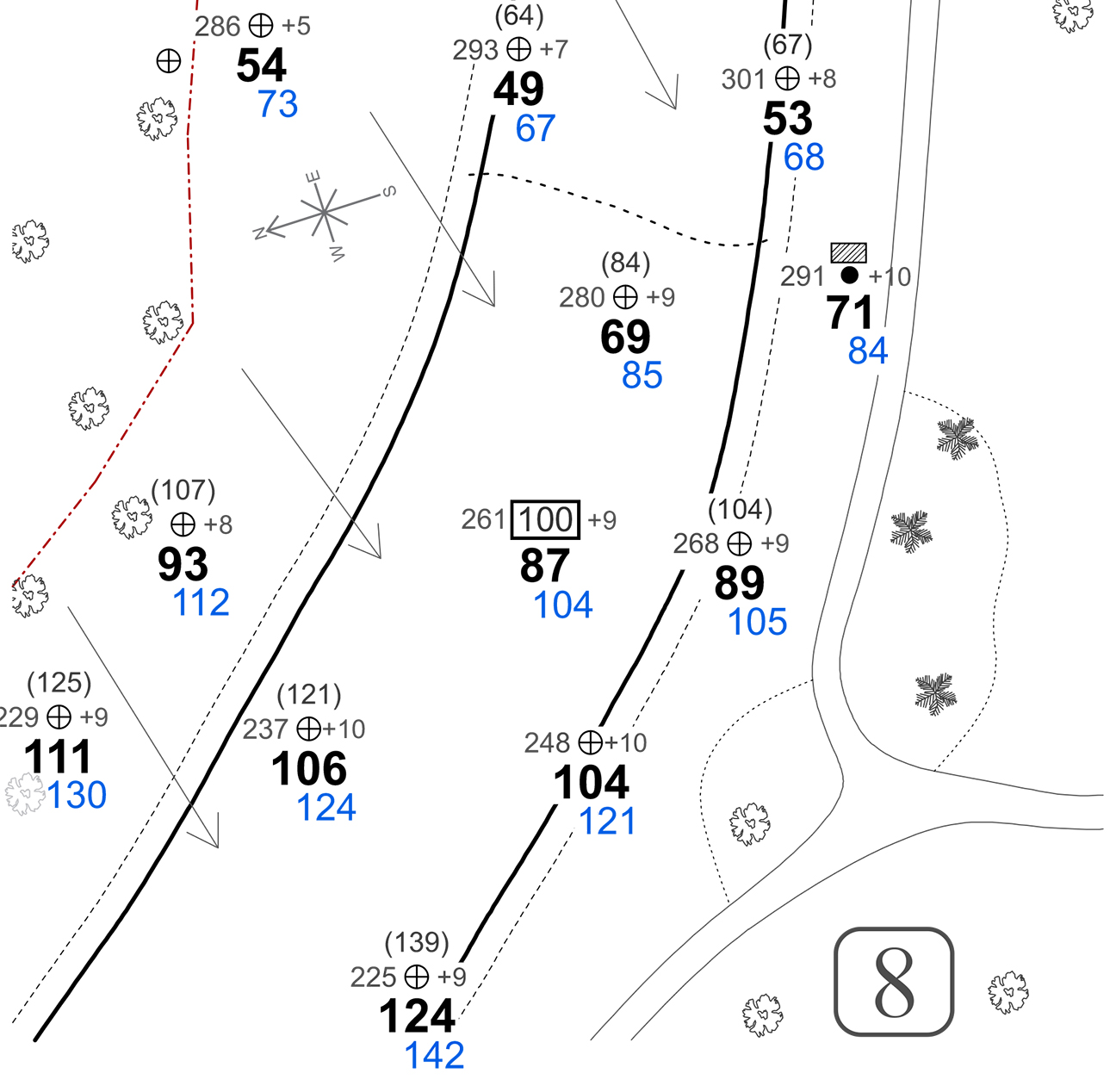
The bottom half of the page gives you two things. First is the green complex. Second is the yardages. The numbers in parenthesis are the yardages printed on the sprinkler heads to the middle of the green. They are insignificant to a pro caddie and golfer most of the time.
The number that matters is in bold black. That's the number to the front edge of the green. The blue number is the yardage to cover the bunker. (See the blue circle by the green on the right). What makes this hole challenging is the elevation change of the green. There's a four-foot height difference between the front edge and the back edge of the three-tiered green!
Imagine getting the speed right when trying to putt from the ground to the roof of your car. Rule No. 1 for your player on this hole, if you're a caddie? Stay below the hole at all costs.
A player just hit a 280-yard tee shot next to the (84) sprinkler head. Let's say the hole is 23 paces on, four paces from the right edge of the green.
Here's what you'd hear on TV:
Player: "What do we got?"
Caddie: "We're playing this 94 cover, 100 hole. Wind into us, from the right. Playing 105 max."
Player: "Little sand wedge, take the spin off?"
Caddie: "Love it."
Are you confused? You shouldn't be.
It means they have 69 yards to the front edge of the green, but wait... See that +9? That means our second shot plays nine yards uphill! The hole is cut back right, so the true front edge doesn't really matter. That blue number 85 + 9 = 94 (add for uphill) is what is important because we have to hit it far enough to fly the bunker.
If the hole is 23 paces on from the front edge, it's +6 from the bunker cover, 94 + 6 = 100. Look at the 29 at the back edge of the green. That's the green's depth. We only have six paces of green behind the hole, so "105 max" keeps us safe if the wind dies down.
You forgot about the wind, didn't you? At least you did all that in less than 40 seconds, right? If you didn't, you'd better hope you're not caddying for Robert Allenby.
Don't worry, the first one is always the hardest.
Yardage books provided by Mark Long -- TourSherpa@gmail.com. Copyright 2015 Tour Sherpa, Inc. All rights reserved.